
How to Prepare for a Saturday Dentist Appointment
31 August 2026 | Children's Dentistry, Dental Fees & Financing, General Dentistry

A Saturday dental visit can be a practical option if weekdays are difficult due to work, school or family commitments. If you have booked a dentist appointment Saturday in Sydenham, a little preparation can help the visit run more smoothly, especially if you are attending for pain, a check-up, cosmetic advice or a child’s appointment.
The main things to organise are your appointment details, health information, payment or health fund items, transport if needed and a clear description of your concern. You do not need to know what treatment you need before you arrive. Your dentist can assess your mouth, discuss possible causes and explain suitable options based on your individual circumstances.
Why Saturday dental appointments need a little extra planning
Saturday appointments can be popular because they suit people who cannot easily attend during standard weekday hours. That can also mean appointment times are more tightly scheduled, so it helps to arrive prepared.
Preparation is especially useful if you are a new patient, have dental anxiety, are bringing children or need help with a painful tooth. It also gives your dental team enough information to consider your medical history, current medications and any symptoms that may affect your care.
If this is your first time attending My Smile Dental, you may also find it helpful to read about what to expect at your first Sydenham dental clinic visit before your appointment.
Confirm the details of your dentist appointment Saturday
Before the day of your appointment, check the basics so there is no last-minute confusion. This is particularly important if you have booked online, arranged the visit for a family member or are attending after a busy week.
A simple confirmation can include:
- The appointment time and expected arrival time
- The clinic address in Sydenham and nearby parking or transport options
- Whether you need to complete new patient forms
- Whether the appointment is for a check-up, clean, emergency concern, cosmetic consultation or another service
- Whether you should bring X-rays, referrals, splints, retainers or previous treatment information
If your symptoms change before Saturday, contact the clinic and explain what is happening. For example, swelling, fever, trauma, uncontrolled bleeding or worsening pain may need earlier advice rather than waiting for a routine appointment.
Write down your symptoms before you arrive
Dental symptoms can be hard to explain once you are in the chair, particularly if you are nervous or in discomfort. Taking a few notes beforehand can help your dentist understand the pattern of the problem.
Try to record:
- When the symptom started
- Where you feel it, such as one tooth, several teeth, gums or jaw
- Whether it is sharp, dull, throbbing, pressure-like or sensitive
- Whether hot, cold, biting, sweet foods or brushing triggers it
- Whether pain wakes you at night
- Whether you have swelling, a bad taste, bleeding or a broken tooth
- What you have taken for relief, including pain medicines or antibiotics
This information does not replace an examination, but it can help guide the assessment. Healthdirect explains that toothache can have different causes, including decay, injury, infection or gum-related problems, so a dental examination is usually needed to identify the likely cause.
If you are unsure whether your concern is urgent, My Smile Dental’s guide to early warning signs of dental problems may help you decide what to mention when booking or confirming your visit.
Bring your medical and dental information
Your mouth is part of your overall health, so your dentist may ask about medical conditions and medications. This is not just paperwork. It can affect which X-rays, anaesthetics, medicines or treatment options may be appropriate.
Bring or be ready to discuss:
- A list of current medications, including over-the-counter medicines and supplements
- Allergies or previous reactions to medicines, latex or dental materials
- Medical conditions such as diabetes, heart conditions, bleeding disorders or immune system concerns
- Pregnancy or breastfeeding, if relevant
- Recent surgery or hospital treatment
- Any dental records, recent X-rays or referral letters you already have
If you take blood thinners, have been advised to take antibiotics before dental care or have a complex medical history, let the clinic know before your appointment if possible. Your dentist can then advise what information may be needed and whether any additional planning is appropriate.
Eat, drink and take medicines as advised
For most routine dental visits, you can usually eat and drink normally beforehand. A light meal before your appointment may be sensible if you are likely to feel hungry, have a busy day planned or are bringing children.
There are exceptions. If your appointment may involve sedation, surgery or a procedure with specific instructions, follow the advice given by the dental team. Sedation and some surgical treatments may require fasting, transport arrangements or changes to your usual routine. Do not stop prescribed medication unless your dentist, doctor or pharmacist has specifically advised you to do so.
If you are attending because of dental pain, avoid putting aspirin directly on the gum or tooth, as this can irritate the tissues. If you are using pain relief, follow the medicine label or advice from a pharmacist, doctor or dentist.
Plan payment, health fund and benefit information
It is reasonable to want clarity about costs before treatment. At the appointment, your dentist can explain what they find, outline suitable options and discuss fees before proceeding, where treatment is recommended.
For a Saturday appointment, bring:
- Your private health insurance card, if you have one
- Medicare details if your child may be eligible for relevant benefits
- Any concession card or benefit information requested by the clinic
- A payment method accepted by the practice
- Questions about payment plans, if this is relevant to your circumstances
The Australian Government’s Child Dental Benefits Schedule provides information about eligibility and covered services for some children. Eligibility, benefit limits and claiming rules can change, so Services Australia is the appropriate source for current details.
Preparing children for a Saturday dental visit
Saturday appointments can be helpful for families, but children often cope better when they know what to expect. Keep the explanation simple and calm. You might say that the dentist will count their teeth, check their gums and talk about brushing.
Avoid promising that nothing will feel uncomfortable, as experiences vary and some procedures can involve pressure, vibration or sensitivity. It is better to say the dental team will explain what they are doing and that your child can ask for a break if they need one.
For younger children, consider bringing:
- Their Medicare card or benefit details, if relevant
- A list of medical conditions, allergies or medicines
- A comfort item if it helps them settle
- A water bottle and simple snack for after the appointment, if suitable
- Any mouthguard, retainer or dental appliance they use
If your household is juggling school, sport and work routines, My Smile Dental’s article on family dental care tips for busy Sydenham households includes practical ideas for keeping home care manageable between visits.
If you feel anxious about going to the dentist
Many people feel uneasy before a dental appointment, even when they know the visit is necessary. Anxiety may be linked to previous dental experiences, fear of discomfort, embarrassment about teeth or uncertainty about costs.
Tell the clinic when you book or arrive if you are nervous. This allows more time for explanation where possible and helps the dental team adjust communication to your needs. You can also agree on a simple hand signal if you need a pause during the examination or treatment.
Some patients may ask about sedation dentistry. Sedation is not suitable for everyone and depends on your medical history, the procedure being considered and the type of sedation available. Your dentist can discuss whether it may be appropriate, along with potential risks, benefits and alternatives.
What to expect during the appointment
The exact appointment flow depends on why you are attending. A check-up is different from an emergency visit or cosmetic consultation, but many appointments include similar first steps.
Your dentist may:
- Ask about your main concern and medical history
- Examine your teeth, gums, bite and soft tissues
- Take X-rays if clinically appropriate and with your consent
- Explain likely findings in plain language
- Discuss options, including benefits, limitations and possible risks
- Provide a quote or treatment plan where further care is recommended
For emergency dental concerns, the first goal may be to assess the cause of pain or damage and discuss ways to manage the immediate issue. Definitive treatment may or may not be completed on the same day, depending on the problem, appointment length, complexity and your individual needs.
If you are unsure which appointment type to book, the article on general, cosmetic and emergency dental services explains the differences in a patient-friendly way.
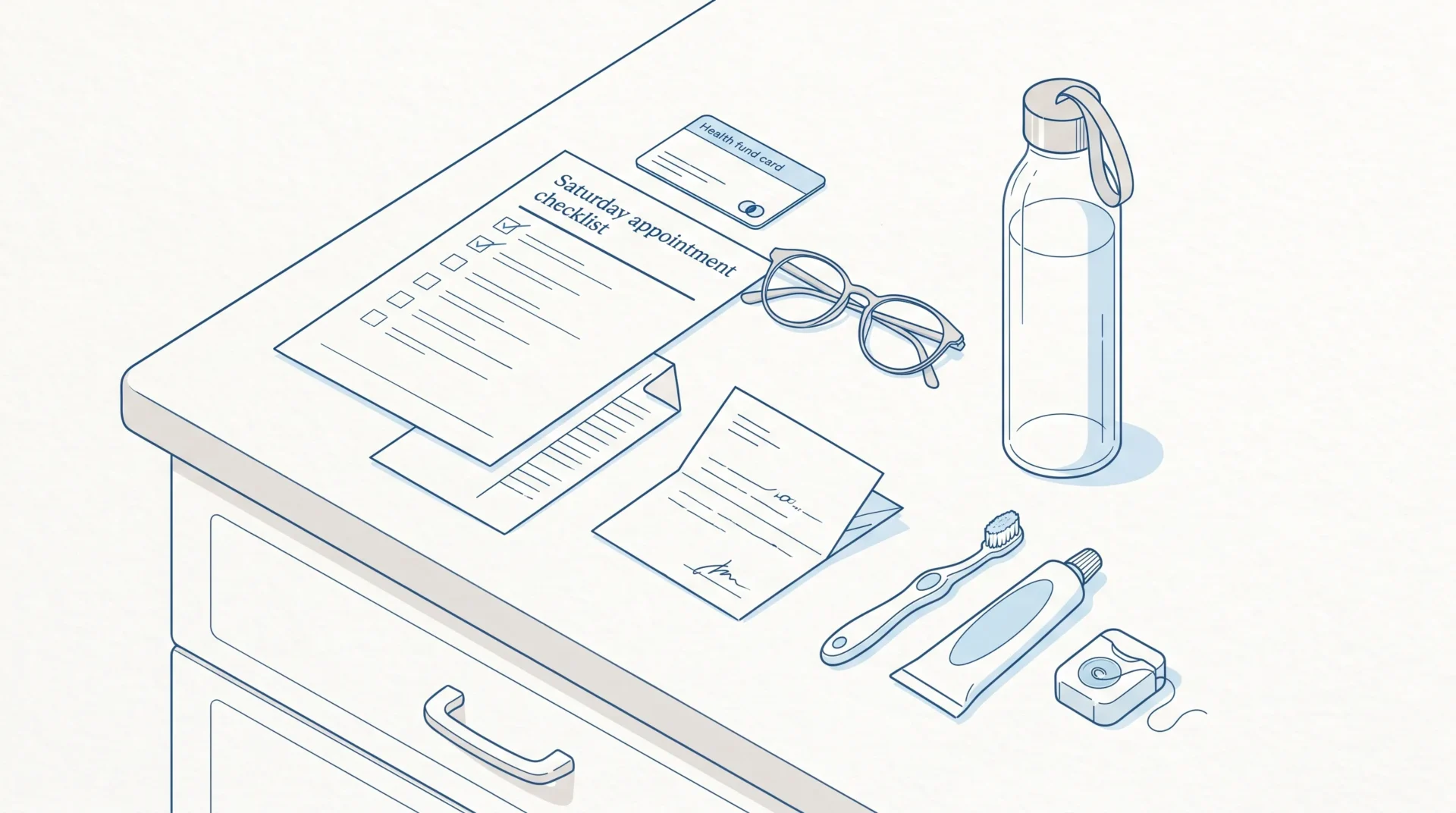
Saturday appointment preparation checklist
Use this checklist the day before your visit, or on Saturday morning if your appointment is later in the day.
| What to prepare | Why it matters |
|---|---|
| Appointment time and clinic location | Helps you arrive calmly and avoid delays |
| Health fund, Medicare or benefit details | Allows the team to check claiming information where relevant |
| Medication and allergy list | Supports safer treatment planning |
| Notes about symptoms | Helps your dentist understand the concern clearly |
| Previous X-rays or dental records | May reduce duplication if they are current and useful |
| Transport arrangements | Important if sedation, extraction or significant treatment may be involved |
| Questions about treatment or costs | Helps you make an informed decision before proceeding |
You do not need to have every answer ready. The goal is to give your dentist enough information to assess your situation properly.
Questions worth asking at the appointment
A good dental appointment should leave you with a clearer understanding of what is happening and what options may be available. If treatment is recommended, it is reasonable to ask questions before deciding.
Helpful questions include:
- What is the likely cause of my symptom?
- Are there any other possible causes?
- What treatment options are suitable for my situation?
- What are the benefits, risks and limitations of each option?
- What happens if I choose to monitor the issue for now, if that is clinically appropriate?
- How many appointments might be needed?
- What should I expect after treatment?
- What costs are involved before I decide?
All dental procedures carry potential risks and benefits. Suitability depends on factors such as your oral health, medical history, anatomy, treatment goals and individual circumstances. Your dentist should explain this in a way you can understand.
When not to wait until Saturday
If you already have a Saturday appointment, it may still be appropriate to contact a dentist sooner if symptoms become more serious. Some situations need prompt professional advice.
Seek urgent dental or medical advice if you have:
- Facial swelling, swelling under the jaw or swelling affecting the eye area
- Fever or feeling generally unwell with dental pain
- Difficulty breathing or swallowing
- Dental trauma, such as a knocked-out adult tooth
- Uncontrolled bleeding after injury or dental treatment
- Severe pain that is not manageable with appropriate pain relief
If symptoms feel serious or life-threatening, call 000 or attend an emergency department. For dental-specific concerns, contacting a dental clinic promptly can help determine the next appropriate step.
After your appointment: allow time for next steps
It can be tempting to pack the rest of Saturday with errands, sport or social plans. If your appointment is a routine examination or clean, you may feel fine to continue your day. If you have treatment, anaesthetic, sedation or an extraction, you may need to take it easier and follow after-care instructions.
Before leaving, make sure you understand:
- Whether you can eat or drink straight away
- How long numbness may last if local anaesthetic was used
- What symptoms are expected and what should be reported
- How to take any prescribed or recommended medicines
- Whether you need a follow-up appointment
- Who to contact if you have concerns after hours
Recovery and treatment experiences vary between patients. If you are uncertain about an instruction, ask before you leave or contact the clinic afterwards for clarification.
Frequently asked questions
Can I book a dentist appointment on Saturday for a dental emergency? This depends on appointment availability and the nature of the emergency. If you have swelling, trauma, uncontrolled bleeding or severe symptoms, contact a dental clinic as soon as possible for advice rather than waiting without guidance.
Should I brush my teeth before a Saturday dental appointment? Yes, if you can do so comfortably. Brush and floss as usual, but do not worry if pain or swelling makes this difficult. Tell your dentist what you have been able to manage.
Can I eat before a Saturday dentist appointment? For many routine appointments, eating beforehand is usually fine. If you are having sedation, surgery or a procedure with special instructions, follow the specific advice provided by your dental team.
What should I bring to my first appointment at My Smile Dental? Bring your health fund card if applicable, Medicare details for children if relevant, a list of medications and allergies, previous dental records if you have them and notes about any symptoms or concerns.
Will treatment be completed on the same day? Sometimes treatment can be provided on the day, but this depends on the diagnosis, treatment complexity, appointment time, your health history and your preferences. Your dentist can explain suitable options after assessing you.
Planning a Saturday visit in Sydenham
A Saturday dental appointment can be a convenient way to look after your oral health around work, school and family commitments. Preparing your information, questions and practical arrangements can help you feel more organised and make the appointment more useful.
If you would like to discuss a dental concern, you can contact My Smile Dental in Sydenham to arrange an assessment. Your dentist can examine your teeth and gums, explain what they find and discuss options that may be appropriate for your circumstances.
Disclaimer
The information provided on this website is for general informational and educational purposes only. It is not intended to replace professional dental advice, diagnosis or treatment. Dental needs and treatment outcomes vary between individuals. Always seek advice from a qualified dental practitioner regarding your specific circumstances before making decisions about your oral health or treatment. A consultation and clinical assessment are required to determine which treatment options may be suitable for you. All dental procedures carry potential risks and benefits, which will be discussed with you before treatment.