
When a Dental Crown May Be Recommended for a Tooth
19 August 2026 | Crowns, General Dentistry, Melbourne Dentist
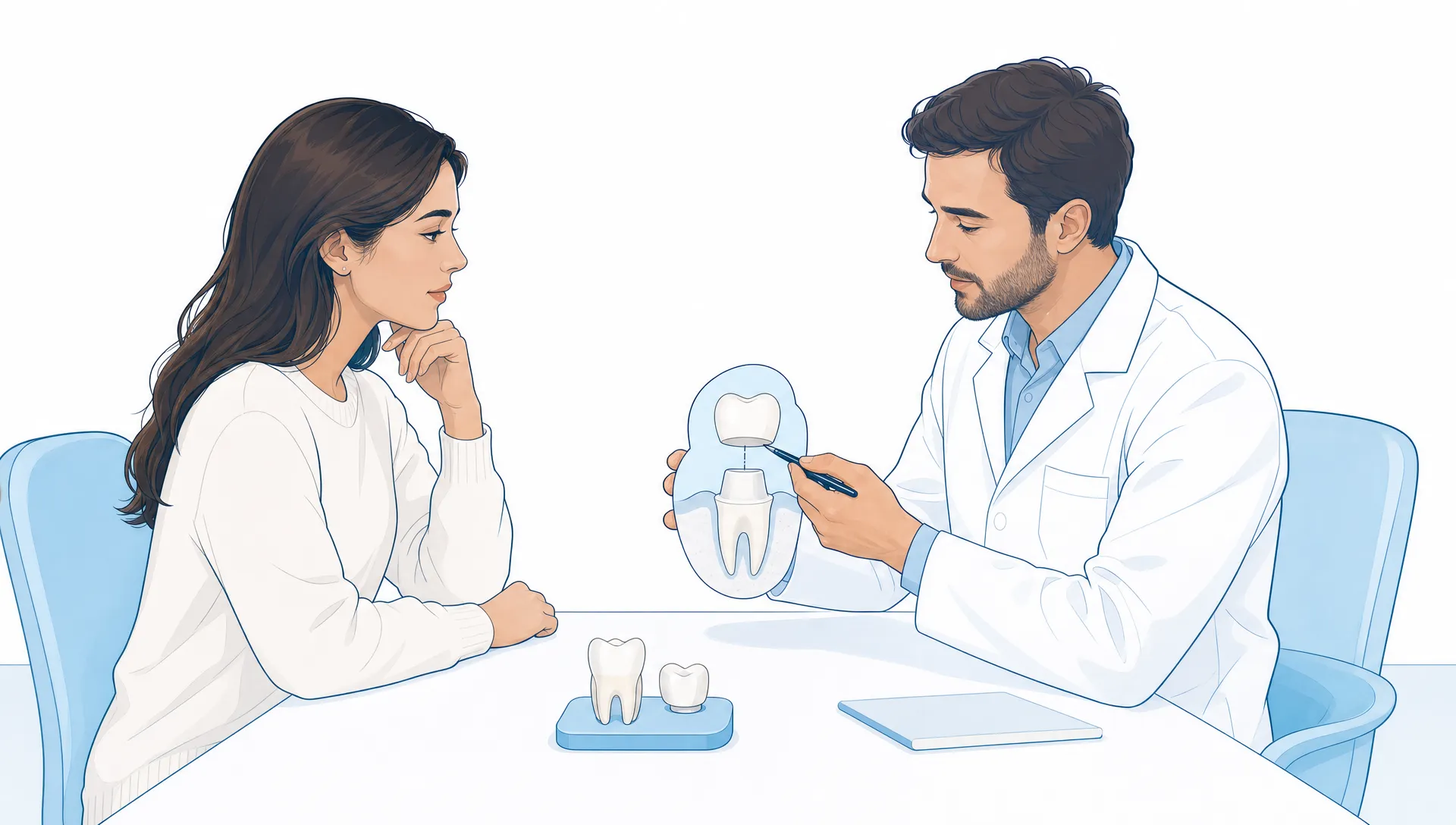
If you have searched for a “dentist that does crowns near me”, you may have a cracked tooth, a large filling, a tooth that keeps breaking or a tooth that has recently had root canal treatment. A dental crown may be one option your dentist discusses, but it is not the right choice for every tooth.
A crown is a custom-made covering that fits over the visible part of a tooth. It can help protect weakened tooth structure, restore shape and improve the way a tooth meets the opposing teeth when you bite. Whether it is suitable depends on the amount of healthy tooth remaining, your bite, gum health, symptoms, medical history and your treatment goals.
What is a dental crown?
A dental crown is sometimes described as a “cap”. It is designed to cover and support a tooth after the dentist has assessed and prepared it. Crowns can be made from different materials, including ceramic, porcelain fused to metal, zirconia or metal alloys. The material recommended can vary depending on where the tooth sits in your mouth, how much biting force it carries, aesthetic preferences and clinical factors.
A crown is not the same as a filling. A filling repairs a smaller area within a tooth, while a crown covers more of the tooth’s surface. A crown is also different from a veneer, which usually covers the front surface of a tooth and is often considered for cosmetic changes. If you are comparing cosmetic options, it can be useful to understand the difference between crowns, veneers and other treatments before making a decision.
When a dental crown may be recommended
A crown may be recommended when a tooth needs more support than a filling can provide. This is usually because the remaining tooth structure is weakened, cracked or at higher risk of further breakdown.
Your dentist may discuss a crown in situations such as:
- A large filling has weakened the tooth: Teeth with large or repeated fillings may have less natural tooth structure left. A crown may help hold the remaining tooth together and reduce the risk of further fracture.
- The tooth is cracked or heavily worn: A crown may be considered when a crack or wear pattern affects the strength or shape of the tooth. Some cracks need careful assessment because they can extend deeper than they first appear.
- A tooth has had root canal treatment: Back teeth that have had root canal treatment may become more brittle over time, particularly if they have large fillings. A crown may be recommended to protect the tooth, depending on its condition.
- There is significant decay or structural loss: If decay has removed a large amount of tooth structure, a crown may be considered after the decay is treated and the tooth is assessed as restorable.
- A tooth has fractured after trauma: A crown may be one option after a dental injury, depending on how much tooth remains and whether the nerve or root has been affected.
- A tooth needs to support another restoration: Crowns may form part of some bridges or be used to restore a dental implant, where appropriate.
- Shape or colour concerns cannot be managed more conservatively: In some cases, a crown may be discussed for cosmetic reasons, but more conservative options should be considered where suitable.
Not every broken, dark or heavily filled tooth needs a crown. Sometimes a filling, onlay, veneer, root canal treatment, gum treatment or extraction may be more appropriate. A clinical examination is needed before a dentist can explain which options are realistic for your tooth.
Signs that a tooth may need assessment
It is worth booking a dental assessment if you notice a tooth has changed, feels weak or behaves differently when you bite. Early assessment may give you more treatment options, although this depends on the cause and the extent of the problem.
Common signs to mention to your dentist include:
- A tooth that feels sharp, rough or chipped
- Pain when biting or releasing your bite
- Sensitivity to cold, heat or sweet foods
- A large filling that feels loose or cracked
- Food trapping around a broken edge
- A visible crack line or missing piece of tooth
- Swelling, pus, a bad taste or ongoing toothache
Symptoms do not always match the severity of a dental problem. Some cracked or decayed teeth cause little discomfort at first. If you are unsure whether a symptom needs attention, this guide to early warning signs of dental problems explains common changes that are worth discussing with a dentist.
Looking for a dentist that does crowns near me in Sydenham?
If you live or work in Sydenham or nearby north-west Melbourne suburbs, a local dental appointment can help determine whether a crown is suitable or whether another option should be considered. At My Smile Dental, a crown assessment would usually begin with a conversation about your symptoms, dental history and what you are hoping to address.
Your dentist may examine the tooth, check your bite, assess the surrounding gums and take X-rays if clinically needed. This helps identify issues that may affect crown suitability, such as decay under an existing filling, cracks, infection, bone support, gum inflammation or signs of grinding.
A crown is usually recommended only when there is a clear reason to protect or restore the tooth. If a more conservative option is likely to be suitable, your dentist can explain that too.
Crown, filling, veneer or root canal treatment?
Patients often hear several treatment terms at once, which can be confusing. The table below outlines how these options generally differ. Your own treatment options may vary after examination.
| Treatment option | What it usually does | When it may be discussed |
|---|---|---|
| Filling | Repairs a smaller area of tooth structure | Small to moderate decay, chips or replacement of an old filling |
| Crown | Covers and supports more of the tooth | Weakened, cracked, heavily filled or root canal treated teeth |
| Veneer | Covers mainly the front surface of a tooth | Selected cosmetic changes to shape, shade or minor surface concerns |
| Root canal treatment | Treats infected or inflamed pulp inside the tooth | Deep decay, infection, trauma or certain types of toothache |
| Extraction | Removes a tooth that cannot be predictably restored | Severe fracture, advanced decay, infection or poor support where other options are not suitable |
Root canal treatment and crowns are sometimes related, but they are not the same procedure. A root canal treats the inside of a tooth, while a crown restores and protects the outside. Some teeth need both, some need one and some need neither.
For broader context on different appointment types, My Smile Dental has an article explaining general, cosmetic and emergency dental services and when each may be appropriate.
What a dental crown appointment may involve
The exact steps can vary depending on the tooth, the material used and whether any other treatment is required first. In general, crown treatment often involves assessment, tooth preparation, an impression or scan, a temporary crown and a final fitting appointment.
During preparation, the dentist shapes the tooth so the crown can fit over it. An impression or digital scan may then be taken so the crown can be made to fit your tooth and bite. A temporary crown may be placed while the final crown is being made. At a later appointment, the dentist checks the fit, bite and appearance before the crown is cemented or bonded.
If the tooth has infection, deep decay, gum concerns or an unstable bite, those issues may need to be managed before or alongside crown treatment. For a broader plain-English overview, this step-by-step explanation of the dental tooth crown procedure may help you understand the general sequence of care.

Benefits and limitations of dental crowns
A crown can be useful when a tooth needs reinforcement and a smaller repair is unlikely to provide enough support. It may help restore chewing function, protect weakened tooth structure and improve the contour of a damaged tooth.
However, crowns also have limitations. They require removal of some tooth structure to create space for the crown. The tooth may feel sensitive after preparation. In some cases, the nerve inside the tooth may become irritated and need further treatment. Crowns can chip, loosen or develop decay around the edges if plaque builds up. Gum health, grinding, clenching and oral hygiene can all affect how well a crown performs over time.
All dental procedures carry potential risks and benefits. Your dentist should explain the alternatives, likely maintenance needs and what may happen if the tooth is left untreated. Treatment outcomes and experiences vary between patients.
How long does a dental crown last?
There is no fixed lifespan for every crown. Longevity depends on factors such as the crown material, how much natural tooth remains, your bite, oral hygiene, diet, grinding habits, gum health and regular dental care.
A crown should still be checked at routine dental visits. The crown itself cannot decay, but the tooth structure at the crown margin can. If plaque sits around the edges of a crown, decay or gum inflammation may develop. If you clench or grind, your dentist may discuss strategies to reduce excessive force on the crown.
Professional cleaning can also support the health of the gums around crowned teeth. If you are unsure how often to book a clean, this article explains factors that influence professional teeth cleaning intervals.
Caring for a crowned tooth
A crowned tooth needs the same daily care as your natural teeth. The join between the crown and tooth is especially important because plaque can collect there.
Helpful habits include brushing twice daily with fluoride toothpaste, cleaning between teeth with floss or interdental brushes, limiting frequent sugary snacks and drinks, wearing a night guard if recommended for grinding and attending dental check-ups at intervals recommended for your individual risk level.
If a crown feels high when you bite, becomes loose, traps food, causes swelling or remains sensitive, book a review. Small bite adjustments or early repairs may be simpler than waiting until the tooth becomes more uncomfortable, although this depends on the cause.
What about cost and payment options?
The cost of a dental crown can vary. Factors include the tooth being treated, the material selected, whether additional treatment is needed, laboratory fees, imaging, temporary crowns and your private health insurance cover if you have it.
It is reasonable to ask for a written treatment plan and estimate before starting. Your dentist can explain what is included, what alternatives may cost and whether staged treatment is possible. My Smile Dental offers payment plan options, and the team can discuss these with you if crown treatment is recommended after assessment.
Cost should not be the only factor when deciding whether to proceed. It is also worth asking about benefits, limitations, maintenance, alternatives and what may happen if treatment is delayed or not completed.
Questions to ask before agreeing to a crown
Before starting crown treatment, you may want to ask:
- Why is a crown recommended for this tooth?
- Are there more conservative options?
- Does the tooth need any other treatment first?
- What material is being considered and why?
- What are the possible risks or complications?
- How will the crown be maintained?
- What should I do if the temporary crown comes loose?
- What costs are involved and are payment options available?
These questions can make the discussion clearer and help you make an informed choice based on your own circumstances.
Frequently asked questions
Is a crown better than a filling? Not always. A filling may be suitable when there is enough healthy tooth structure to support it. A crown may be considered when the tooth is too weakened, cracked or heavily filled for a filling to provide adequate support. Your dentist can assess which option may be appropriate.
Do I need a crown after root canal treatment? Some root canal treated teeth, especially back teeth with large fillings, may benefit from a crown. Other teeth may not need one immediately. Suitability depends on the tooth’s structure, location and biting forces.
Can a crowned tooth still get decay? Yes. The crown material does not decay, but the natural tooth at the crown edge can. Brushing, interdental cleaning and regular dental reviews help reduce this risk.
What happens if I delay getting a crown? This depends on the tooth. Some teeth remain stable for a period, while others may crack further, develop pain or become harder to restore. Your dentist can explain the likely risks based on the examination findings.
Can I get a crown if I feel anxious about dental treatment? Yes, many anxious patients can still be assessed for crown treatment. You can discuss comfort strategies and whether sedation may be suitable for your circumstances. Suitability for sedation depends on your health history and the type of procedure.
Arranging a crown assessment in Sydenham
If you have a cracked, heavily filled or weakened tooth, a dental examination can help determine the cause of the problem and which options may be appropriate. A crown may be one option, but your dentist should also explain alternatives where they are relevant.
To discuss your concerns, you can book an appointment with My Smile Dental in Sydenham. Your dentist can assess the tooth, explain the potential benefits and risks and help you make an informed decision based on your oral health and individual needs.
Disclaimer
The information provided on this website is for general informational and educational purposes only. It is not intended to replace professional dental advice, diagnosis or treatment. Dental needs and treatment outcomes vary between individuals. Always seek advice from a qualified dental practitioner regarding your specific circumstances before making decisions about your oral health or treatment. A consultation and clinical assessment are required to determine which treatment options may be suitable for you. All dental procedures carry potential risks and benefits, which will be discussed with you before treatment.