Choosing a Dentist for Teeth Cleaning
15 October 2026 | Dental Hygienists, Preventative Dentistry, Teeth Cleaning
If you are searching for a “dentist near me for teeth cleaning” in Sydenham, look beyond distance alone. A suitable clinic should assess your oral health, explain what cleaning is appropriate and discuss fees and comfort before treatment begins. The nearest appointment or lowest advertised price does not necessarily tell you what care is included.
For patients in Melbourne’s north-west, choosing a local dentist also involves practical questions: who will provide the cleaning, how concerns are handled and whether the recommended care suits your individual needs.
Start with registration and clear communication
Dental practitioners in Australia must hold registration appropriate to their role. You can check a practitioner’s registration through the AHPRA register of practitioners, rather than relying on promotional descriptions alone.
A professional clean may be provided by a dentist, dental hygienist or oral health therapist, depending on the practitioner’s scope of practice and your needs. Dental hygienists focus on preventive care and gum health. Oral health therapists provide preventive care and other dental treatments within their scope.
Ask who will see you and whether a dental examination is included or arranged separately. If the assessment identifies an issue beyond that practitioner’s scope, ask how further care would be organised.
Good communication matters just as much as knowing who holds the instruments. You should have an opportunity to explain concerns, ask questions and understand the proposed treatment before agreeing to it.
What to look for in a dentist near me for teeth cleaning
A useful appointment starts with understanding your mouth, not automatically applying the same cleaning package to everyone.
An assessment before treatment
Your practitioner should ask about your medical history, medicines, dental concerns and previous treatment. Mention bleeding gums, sensitivity, implants, crowns or anything that made an earlier appointment difficult.
Plaque is a sticky film of bacteria that collects on teeth. Tartar, also called calculus, is hardened plaque that cannot be removed by ordinary brushing. Professional cleaning can remove these deposits, but the areas needing attention and the amount of treatment required vary.
Gum health also needs consideration. Victoria’s Better Health Channel guidance on gum disease explains the relationship between plaque and gum inflammation. A clean alone may not be sufficient when more advanced gum disease is present.
A reason for each recommended service
A routine scale and polish is different from treatment for gum disease. Scaling removes deposits from tooth surfaces, while polishing may be used to remove selected surface stains. Cleaning below the gumline may be recommended after a gum assessment, rather than simply because you have not attended recently.
When comparing results for “dentist near me for teeth cleaning”, look for explanations of why a service is recommended, not promises that every patient needs the same treatment.
Questions to ask before booking in Sydenham
A short conversation with the clinic can clarify what you are booking and reduce surprises. Reception staff may explain the appointment arrangements, although clinical recommendations usually require an examination.
| Question to ask | What it helps clarify |
|---|---|
| Does this appointment include a dental examination? | Whether the booking is for cleaning only or a broader oral health assessment |
| Who will provide the cleaning? | The practitioner’s role and how any additional concerns will be assessed |
| What is included in the quoted fee? | Whether examination, cleaning, polishing or other services are separate |
| Are X-rays included or charged separately? | How imaging is priced and whether its need will be assessed |
| What happens if I need gum treatment? | Whether the proposed treatment and estimate will be discussed before proceeding |
| Can I discuss sensitivity or dental anxiety beforehand? | Whether your concerns can inform appointment planning |
X-rays should be recommended according to clinical need, not assumed to be necessary at every cleaning visit. The dentist may consider symptoms, examination findings, previous images and your risk of dental disease.
If you are returning after a long break, say so when booking. This helps the clinic plan an appropriate assessment without assuming that extensive treatment is needed.
The practical value of a “dentist near me for teeth cleaning” also depends on whether getting to appointments is manageable. Ask about appointment availability, parking, public transport or accessibility requirements rather than assuming a nearby clinic meets every need.
Compare fees on the same basis
An advertised cleaning fee may not represent the full cost of an examination and any other clinically indicated care. Before comparing prices, find out what each estimate includes.
Ask for an itemised estimate where possible. If the examination identifies a need for additional treatment, request an explanation of the options, expected costs and whether care can be staged appropriately. A change in the treatment plan should be discussed with you before proceeding.
For people with private health insurance, benefits depend on the policy, annual limits, waiting periods and treatment provided. A clinic’s estimate is not a guarantee of what your insurer will pay. Checking the proposed item numbers with your insurer can help clarify your likely out-of-pocket cost.
Choosing a “dentist near me for teeth cleaning” on price alone can be misleading when one quote includes an examination and another does not. Transparent fees and a clear treatment plan make comparisons more useful.
It is reasonable to ask questions or take time to consider non-urgent recommendations. You do not have to agree to additional treatment simply because it has been offered.
Look for a practical approach to comfort
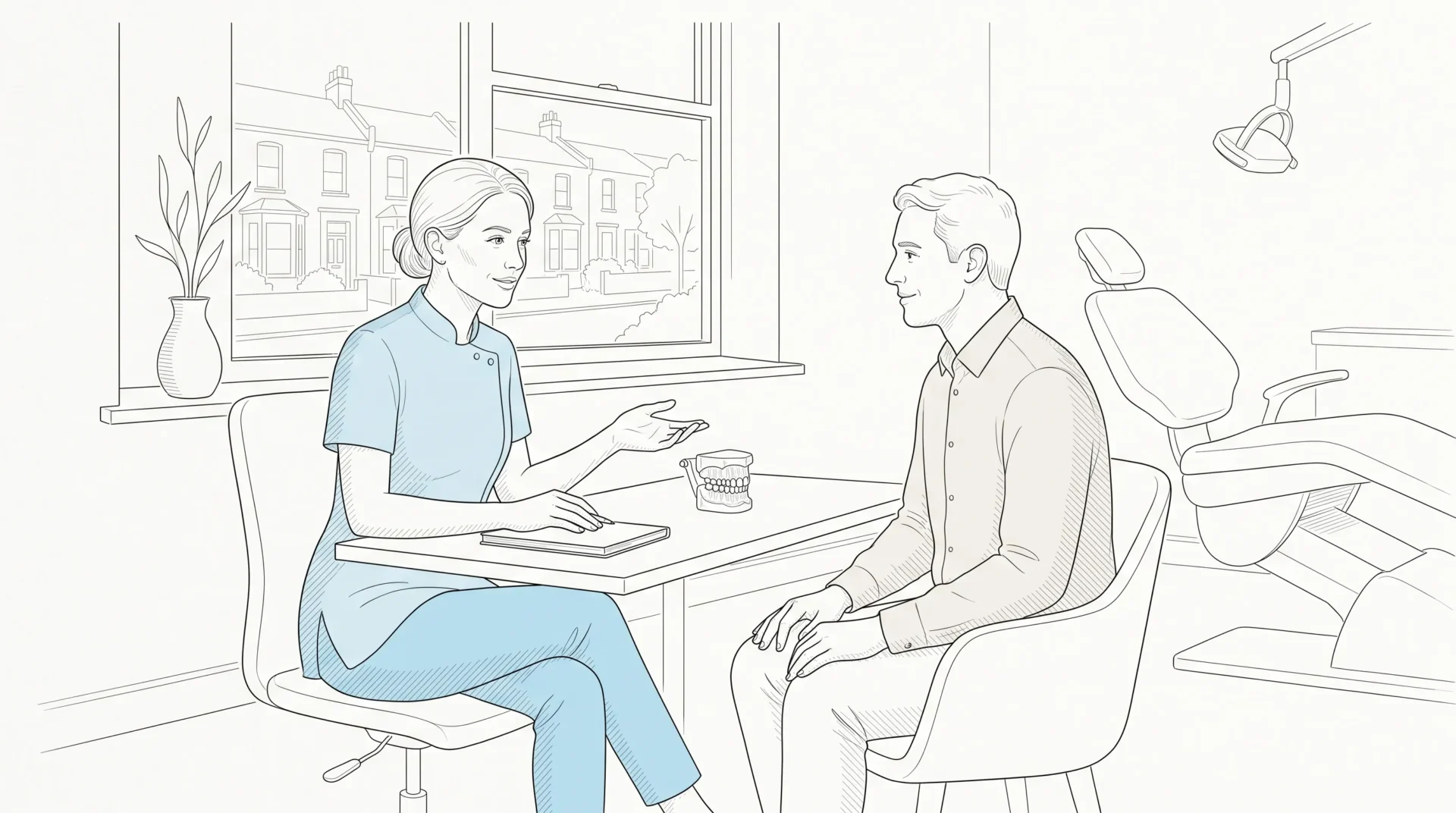
If you have sensitive teeth or feel anxious about dental visits, mention this before treatment starts. Useful questions include whether you can agree on a stop signal, request breaks and discuss discomfort as it occurs.
Cleaning may involve pressure, vibration, water spray and some sensitivity. Experiences vary, particularly when gums are inflamed or tooth roots are exposed. Temporary tenderness, minor bleeding or sensitivity can occur afterwards. Persistent or worsening symptoms should be discussed with the clinic.
Depending on your needs, your practitioner may adjust the approach or discuss local anaesthetic for more involved cleaning. All procedures and medicines have potential benefits and risks, so these choices require an individual discussion.
My Smile Dental offers sedation dentistry, but sedation is not automatically needed for a cleaning appointment. Suitability, risks, preparation and costs require assessment before it is recommended.
When choosing a “dentist near me for teeth cleaning”, specific explanations about managing discomfort are more useful than a promise that treatment will be painless. Our guide to finding gentle dental care in Sydenham explores communication, pacing and informed consent in more detail.
Consider what happens after the clean
A useful appointment should leave you understanding the findings, any areas that need attention and what you can do at home. Advice should be practical and adapted to your mouth, rather than limited to “brush better”.
Your practitioner may discuss brushing technique, cleaning between teeth or caring for existing dental work. Professional cleaning supports home care but does not replace it.
The timing of another clean should depend on your gum health, deposit build-up and other relevant factors. There is no single schedule that suits everyone. Our explanation of how often to book a professional teeth clean covers how recall intervals can be tailored.
A “dentist near me for teeth cleaning” should also explain whether follow-up is needed and why. If gum treatment is recommended, ask how your response will be reviewed and what alternatives may be appropriate.
When a routine cleaning booking may not be enough
Tell the clinic if you have ongoing toothache, swelling, persistent bleeding gums or a loose adult tooth. These concerns may need assessment beyond a routine clean, and the clinic can advise on the appropriate appointment.
Facial swelling with fever warrants prompt professional advice. Difficulty breathing or swallowing requires immediate emergency medical attention; call 000.
If you mainly want to understand the procedure itself, our guide to when to see a dental hygienist for professional cleaning explains what cleaning can involve and how it differs from more involved gum care.
Frequently asked questions
Do I need a clean every six months? Not necessarily. Your practitioner should recommend an interval based on your oral health and individual risk factors. Some people need closer monitoring, while others may be advised to attend less frequently.
Will cleaning whiten my teeth? Cleaning may remove some surface staining, but it does not bleach teeth or change their natural underlying colour. It also cannot repair decay, cracks or damaged restorations. Whitening is a separate treatment that requires an assessment of suitability.
Can I book a clean if my gums bleed? Yes, but tell the clinic about the bleeding so the appointment can include an appropriate assessment. Bleeding can have several causes, and a routine clean may not be the only care required.
Should I choose a dentist or a hygienist? Either may provide appropriate cleaning within their scope of practice. What matters is that your needs are assessed and that dental examination, further treatment or referral can be arranged when indicated.
Discuss your cleaning needs in Sydenham
If you are considering a cleaning appointment, you can contact My Smile Dental in Sydenham to discuss booking arrangements, fees and any concerns about sensitivity or anxiety. An assessment can help determine what care is appropriate and give you an opportunity to understand the benefits, limitations and alternatives before deciding.
Disclaimer
The information provided on this website is for general informational and educational purposes only. It is not intended to replace professional dental advice, diagnosis or treatment. Dental needs and treatment outcomes vary between individuals. Always seek advice from a qualified dental practitioner regarding your specific circumstances before making decisions about your oral health or treatment. A consultation and clinical assessment are required to determine which treatment options may be suitable for you. All dental procedures carry potential risks and benefits, which will be discussed with you before treatment.